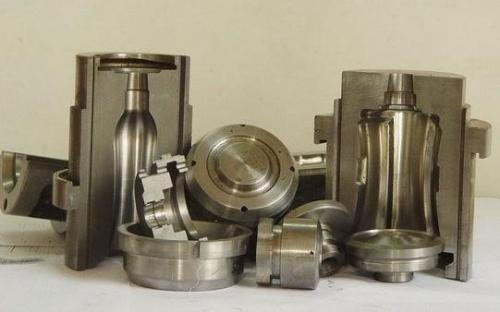
In recent years, with the development of Industry 4.0, the speed of China's manufacturing industry moving from "manufacturing" to "intelligent manufacturing" has become increasingly rapid. 3D printing technology has been widely used in China's manufacturing industry, and 3D printers can provide efficient and low-cost support for mold design and manufacturing. Even with the rapid development of 3D printing technology, in some fields, it has gradually begun to overturn mold technology and form a direct competitive relationship with it.
Compared to 3D printing technology, traditional mold manufacturing requires more steps and processes, and the mold production cycle is longer. When a mold manufacturer launches a new product, it needs to pass strict international standards and certifications before being launched, and the certification of numerous components will take a huge amount of time. This will put the new product in a very disadvantageous position in terms of market capture time. 3D printing injection molds are an efficient solution. The well-known manufacturer Yimei Mold does this by using 3D printing technology to manufacture injection molds in their open laboratory. ”According to Luo Baihui, Secretary General of the International Mold Association, it usually takes several weeks to two months to produce a mold, but using 3D printing technology can complete the mold prototype within a few hours and make immediate modifications based on test results. Then inject the final product sample. These product samples can be directly sent for certification, while traditional mold manufacturing may still be in production, and even before the mold is finalized, 3D printed products have already passed certification, greatly shortening the development cycle. Only in the mold production cycle, 3D printing technology has had a certain impact on traditional mold manufacturing.
However, industry experts say that although 3D printing technology has many advantages such as short production cycle, convenient raw materials, and uniform product pressure, it cannot completely replace traditional mold manufacturing methods because there are still some problems in the production and manufacturing process of 3D printing technology. For example, 3D printing technology processes products layer by layer, which may shorten the production cycle of the mold, but at the same time, it can also lead to a step like effect on the mold surface. Directly printed molds also have similar problems, which require mechanical processing or sandblasting in the later stage to eliminate these small, toothed edges. In addition, holes smaller than 1mm must be drilled, larger holes need to be enlarged or drilled, and thread features need to be tapped or milled. These secondary treatments greatly weaken the speed advantage of 3D printing molds.
At the same time, to ensure good material flowability, injection molds need to be heated to very high temperatures. Aluminum and steel molds typically experience temperatures of 500F (260 ℃) or even higher, especially when processing high-temperature plastics such as PEEK and PEI materials. It is easy to produce thousands of parts using metal molds, and they can also be used as transition molds before the final mass production molds are produced. The mold materials manufactured using 3D printing technology are generally photosensitive or thermosetting resins, which are cured by ultraviolet light or laser. These plastic molds, although relatively hard, damage very quickly under the thermal cycling conditions of injection molding. In fact, 3D printed molds typically fail within 100 uses in mild environments, such as high-temperature plastics like polyethylene and/or styrene. For glass filled polycarbonate and high-temperature resistant plastics, only a few parts can be produced.
In addition, a major reason for using 3D printed molds is their low cost. The cost of production grade machining molds is generally $20000 or even more, which means that it is comparable to a $1000 printing mold. However, this analogy is not fair. The evaluation of printing mold templates usually only considers material consumption and does not take into account labor, assembly and installation, spray systems, and hardware. For example, ProtoLabsd's aluminum mold costs $1500 and can be used for production. If more parts need to be produced, 3D printing molds are used. For every 50-100 products produced, new molds need to be reprinted, assembled, and tested by assembly machines. On the other hand, regardless of the plastic used, aluminum molds typically remain in good service even after producing 10000 parts. Therefore, in terms of production costs, 3D printing is not more cost-effective than traditional mold manufacturing methods.
In addition, in terms of product design, the principles and practices of traditional injection mold manufacturing have a history of over a century, and the industry has conducted thorough research on them. For example, the draft angle must be greater than or equal to 5 degrees to meet the requirements of most aluminum molds. 3D printing molds for injection molding plastic parts face challenges, and extra caution is needed regarding the number and installation position of plastic mold pins. In terms of increasing the wall thickness of the mold cavity and reducing pressure, 3D printed molds (especially at high injection molding temperatures) are more flexible to some extent. The design of the sprue is also different, and the use of tunnel and point sprues should be avoided. The direct gate, fan-shaped gate, and wing shaped gate should be increased to three times the normal size. The flow direction of the polymer in the printing mold should be consistent with the 3D printing line to avoid high filling caused by viscosity and low pressure. The cooling system can improve the lifespan of the mold to some extent, but it will not significantly reduce the number of cycles of the printed mold, as the heat dissipation ability of 3D printed molds is not as good as that of aluminum or steel molds.
Overall, 3D printing technology will not completely replace the position of traditional mold manufacturing industry. Compared with traditional mold manufacturing, 3D printing molds still have certain shortcomings in terms of finished product quality, product cost, and mold design. Moreover, 3D printing is not suitable for mass production, as the cost unit price for producing one piece is similar to that of producing 10000 pieces, and 3D printing also requires a longer time. At present, 3D printing technology can only be used for mold production with tight requirements for small-scale production cycles, and traditional mold manufacturing is still the main method for large-scale production.